

3D 4D HD ultrasound differences explained in plain language usually come down to one simple idea: each format is built on the same underlying scan, just processed and displayed differently. 3D gives you a still, sculpted portrait. 4D adds real-time movement. HD is a resolution and clarity upgrade that can apply to either one. Understanding how these three pieces fit together makes choosing a package at Baby Realz much easier.
This guide breaks down each term individually, explains how they build on one another, and offers a few practical pointers for matching a format to what you actually want to walk away with.
Last reviewed: August 2026
3D 4D HD ultrasound differences come down to processing and display rather than separate technologies. 3D captures a still, three-dimensional surface rendering of your baby. 4D adds real-time motion to that same rendering. HD describes the resolution and clarity of the final image, and it can be applied to either 3D or 4D output.
It helps to think of it less like three competing products and more like layers on the same foundation. The underlying ultrasound data captured by the machine is largely the same. What changes is how that data gets processed and shown to you on screen.
This distinction matters when you are comparing packages, since studios sometimes use these terms loosely in marketing. Knowing exactly what each label refers to helps you ask sharper questions before booking, whether that is at Baby Realz or anywhere else.
Before getting into 3D, 4D, and HD, it helps to understand 2D, since it is the foundation everything else builds on. A 2D ultrasound produces the flat, grainy black-and-white image most people picture when they think of a pregnancy scan. It is the standard imaging method used in clinical prenatal care, including routine anatomy scans.
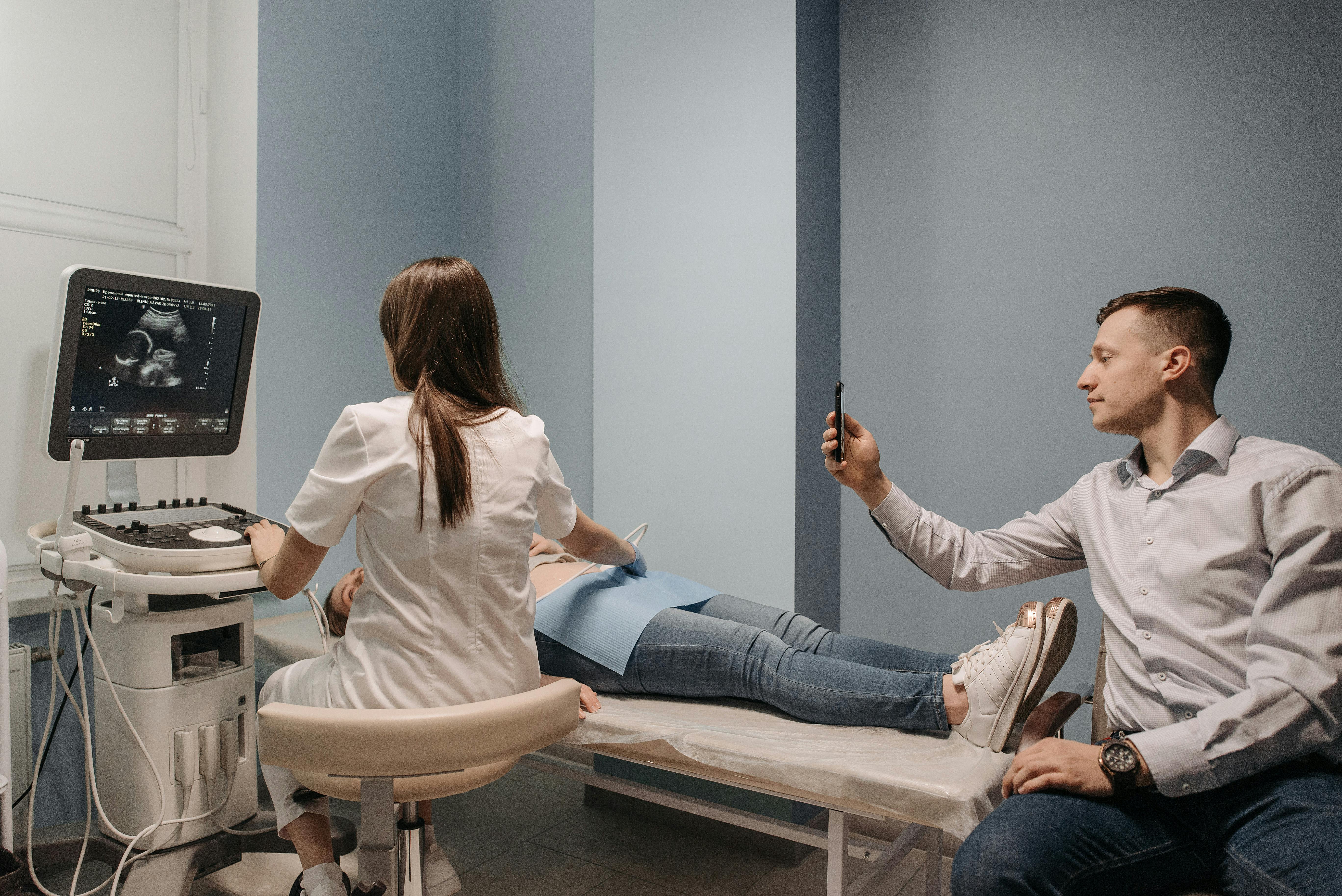
2D remains the workhorse of medical ultrasound because it is highly effective for measuring anatomy, checking growth, and confirming a heartbeat. Elective 2D scans at Baby Realz are also available as quick, affordable reassurance visits throughout pregnancy.
Some families are surprised to learn that even a 3D or 4D session typically starts with a brief 2D pass. The sonographer uses that flatter view first to confirm position and orientation before switching to the more processed 3D or 4D display for the keepsake portion of the visit.
3D ultrasound takes multiple 2D image slices and reconstructs them into a three-dimensional surface rendering, similar to how a sculptor might build up a face from many thin layers. The result is a still image with real depth and texture, capturing expression, facial structure, and skin surface detail that a flat 2D scan simply cannot show.
Because 3D is a still image, it tends to work best for families who want a clear, printable portrait. Grandparents often respond strongly to a 3D image specifically because it looks more like a recognizable baby photo than the more abstract lines of a 2D scan.
Lighting and skin surface conditions inside the womb also play a role in how a 3D image turns out. Enough amniotic fluid surrounding the face, without too much umbilical cord or a hand in the way, generally produces the cleanest results.
4D ultrasound uses the same 3D rendering technique but adds the fourth dimension of time, streaming a continuous series of 3D images to create live motion. Instead of a single frozen frame, you watch your baby yawn, stretch, or turn in real time on the screen.
According to the American Institute of Ultrasound in Medicine, diagnostic ultrasound has an extensive safety record in obstetric care when performed at standard clinical exposure levels, which applies equally to 3D and 4D elective imaging using the same underlying scan technology.
Families who want to capture a specific moment, a smile, a hiccup, a hand near the face, tend to prefer 4D, since it gives the sonographer more opportunities to catch that exact instant compared to a single 3D still.
Video length varies by package, but most 4D sessions capture several minutes of live footage over the course of the appointment, giving the sonographer multiple chances to catch a clear, well-positioned moment rather than relying on a single attempt.
HD is sometimes the most misunderstood term of the three. It is not a separate dimension or a different scanning method. It refers to the resolution, processing, and clarity applied to either a 3D still or a 4D live session, producing sharper edges, smoother skin texture, and more defined facial features.
Most keepsake studios, including Baby Realz, combine HD processing with 4D live sessions for the packages built around facial detail, since that combination tends to produce the sharpest, most emotionally resonant images.
It is worth asking directly whether a package labeled HD actually includes higher-resolution processing, or whether the term is being used loosely as a general marketing label. A quick question to the front desk before booking usually clears this up.
If a printable portrait is your main goal, a 3D session covers that well on its own. If you want to capture movement and share a video with family who could not attend, 4D adds real value. If facial clarity matters most, regardless of whether you choose 3D or 4D, look specifically for an HD package.
Our sonographers recommend booking the HD Grand or VIP-level packages if capturing a specific, share-worthy moment is your priority, since these sessions build in extra time and worldwide live streaming for relatives who cannot attend in person.

Many Baby Realz packages bundle these formats together rather than forcing a strict choice. You can review the full ultrasound packages and pricing to see exactly which combination each tier includes, and browse the heartbeat animals page if you want to pair your imaging choice with an additional keepsake.
Regardless of which format you choose, timing plays a major role in image quality. According to the American College of Obstetricians and Gynecologists, routine prenatal anatomy ultrasounds are typically completed around 18 to 22 weeks, a stage focused mainly on movement and structural checks rather than fine facial detail.
For elective keepsake sessions, 26 to 32 weeks tends to offer the clearest facial detail across 3D, 4D, and HD formats alike, since the baby has filled out enough for defined features while still having room to reposition for a good angle. You can read more about gender-focused timing on our gender determination page if that is part of your visit as well.
Whichever format and week you choose, the same underlying principle applies across the board. Clearer imaging comes from a combination of good timing, favorable baby positioning, and an experienced sonographer who knows how to work with whatever the day brings, rather than any single piece of equipment alone.
Baby Realz offers 2D, 3D, 4D, and HD elective ultrasound sessions in Leesburg, built around every stage of pregnancy.
Compare Packages and Book3D produces a still, sculpted image, while 4D uses the same technique to show live, real-time movement.
No, HD refers to the resolution and clarity of the image, and it can be applied to either 3D or 4D imaging.
3D imaging tends to work best for a clear, printable still portrait of your baby's face.
4D imaging, especially with a video clip or live streaming option, allows relatives to see actual movement rather than a single still image.
Yes, 2D remains the standard for clinical prenatal care, including growth checks, anatomy scans, and heartbeat confirmation.
According to the American Institute of Ultrasound in Medicine, diagnostic ultrasound has a strong safety record at standard clinical exposure levels across all these formats.
Most families see the clearest HD results between 26 and 32 weeks, once the baby has filled out but still has room to reposition.
Yes, many Baby Realz packages combine these formats so you do not have to choose only one during your visit.
Yes, an experienced sonographer can find a clearer angle more efficiently, which matters across every format from 2D to HD.